WE DON'T OWN EVERYTHING
WE OWN
The clearly recognisable imbalance in opportunities for an economically secure life is particularly evident in the age of globalisation. The widening gap between rich and poor exacerbates the potential for social conflict, especially in the hotspots of our society. The industrialisation of the Western world and the unstoppable momentum of globalisation are contributing significantly to the worsening of already precarious living conditions in disadvantaged regions of the world.
The Werner Erkes Foundation in Düsseldorf is passionately committed to education and development in Africa. Our values form the foundation of our work and guide us in all our projects. Tolerance is of central importance to us. We believe that treating each other with respect and accepting different cultures and perspectives form the basis for a harmonious society.
Education for all is our main concern. We firmly believe that every person, regardless of gender, origin or social status, has the right to a high-quality education.
By building schools and implementing educational projects, we create opportunities for children and young people to develop their potential. We place a particular focus on supporting girls and young women. We are actively committed to ensuring that girls have the same educational opportunities as boys. Education is the key to self-determination and improving the living conditions of women and their families.
The fulfilment of the UN's 2030 Agenda is another important aspect of our work. We are guided by the global Sustainable Development Goals and contribute to combating poverty, promoting education and achieving gender equality.
We are also committed to preventing corruption. Transparency and integrity are essential for us to gain and maintain the trust of the community and our partners. A central goal of our foundation is to prevent migration from Africa. By creating educational and development opportunities locally, we want to help people find prospects in their home countries and stay there.
The Werner Erkes Foundation stands for a future in which education, tolerance and respect form the basis for a better life in Africa. Together with our partners, we strive to put these values into practice.
We support the 17 global sustainability goals of Agenda 2030
"EDUCATION IS THE ONLY SOLUTION.
EDUCATION IS THE BEGINNING OF EVERYTHING."
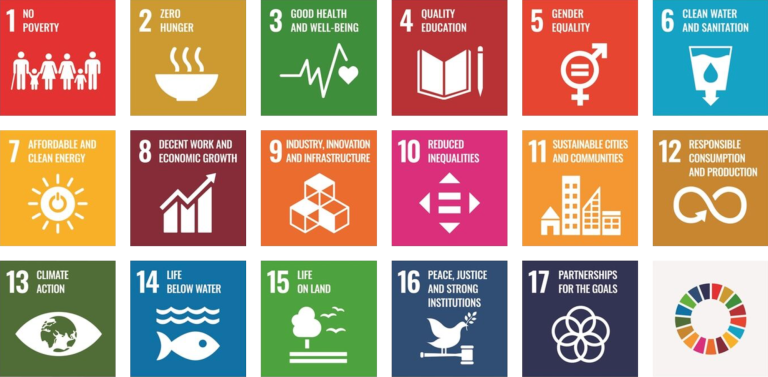
With the 2030 Agenda adopted in 2015, the international community under the umbrella of the United Nations has committed itself to 17 global goals for a better future.
The guiding principle of the 2030 Agenda is to enable people everywhere to live in dignity, while sustainably preserving the natural foundations of life. This encompasses economic, ecological and social aspects. The 2030 Agenda emphasizes the shared responsibility of all actors: politics, business, science, civil society – and every individual.
The Werner Erkes Foundation has set itself the goal of promoting the sustainability goal of HIGH-QUALITY EDUCATION with its initiative. While most children and young people in Germany go to school every week, around one in six children worldwide cannot attend school. For the children concerned, this means that they have little knowledge and often learn neither reading nor writing nor arithmetic. As a result, they can only do a low-skilled job later on and often earn very little money.
Children living in poverty in particular are unable to attend school because they lack the money for tuition and school supplies. These children start working early to support their family. Sometimes there is no school nearby at all.
This makes it difficult for them to escape poverty. They lack important qualifications and skills. The low level of education of a population is not only a problem for the people concerned, but also for the country as a whole. If a country does not have educated and qualified specialists, it can hardly develop further and grow economically in the long term on its own.
Even if many children are able to go to school, more than half of them still cannot read and write properly. This is often because the schools and teachers are poorly equipped. While schools in Germany are increasingly using computers and technology, almost half of the schools south of the Sahara have no access to drinking water, no electricity, no computers and no internet. In addition, there is a lack of qualified teachers to effectively impart knowledge to the students.
“So let us take up the fight against illiteracy, poverty and terror and to do that, we need to pick up our books and our pens. They are our most effective weapons. One child, one teacher, one pen and one book can change the world. Education is the only solution. Education is the beginning of everything.”*

Malala Yousafzai, children's rights activist and Nobel Peace Prize winner
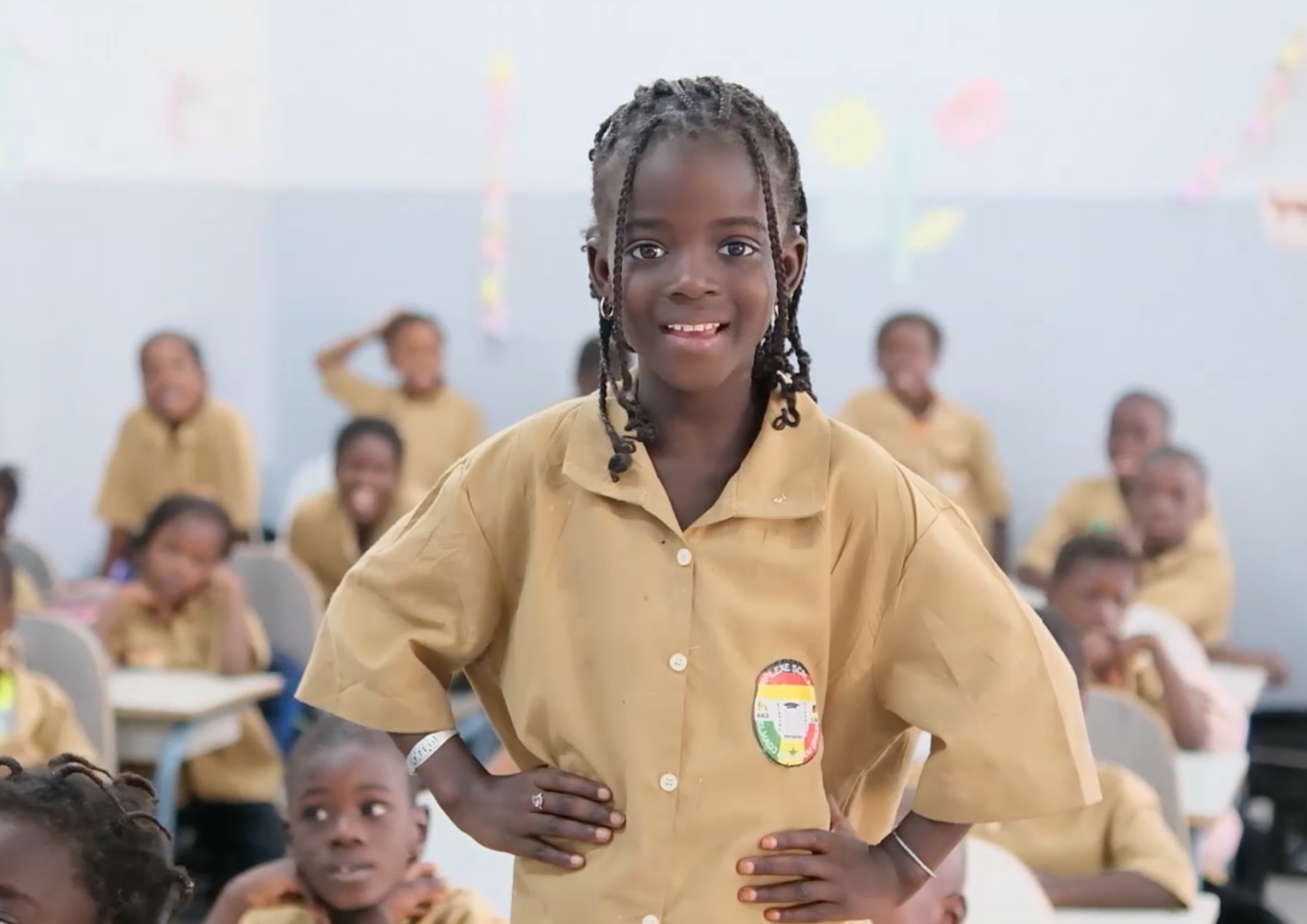
The future belongs to the children
African children and young people possess an impressive inner strength – a strength born of hope, curiosity and optimism. Girls in particular demonstrate their eagerness to learn and their ambition every day. Despite many challenges, they come to school with shining eyes, learn with perseverance and dare to dream of a better future.
For them, education means much more than learning to read and write. It is the key to self-determination, economic independence and social participation. Girls who receive a good school education develop self-confidence, discover their talents and become strong voices in their families and communities. They stand for change – for progress, equality and sustainable development.
Schoolchildren are the future of their countries. Tomorrow's doctors, teachers, entrepreneurs, engineers and leaders are growing up in their classrooms.
As a foundation, we see it as our responsibility and our heartfelt mission to make education accessible and enable self-determination. We want to empower young people, help them realise their potential and offer them safe learning spaces. Through school materials, scholarships, mentoring programmes and education, we create opportunities – not only for individual children, but for entire communities.
Because every educated child changes the world a little bit. Investing in their education is investing in peace, stability and prosperity. Together, we can help turn hope into reality – and dreams into the future.
TOGETHER WE CAN ACHIEVE MORE
Cooperation based on partnership combines strengths and increases efficiency and effectiveness.
We value partnerships with non-profit organisations in Germany and Africa that are on an equal footing with us. We believe in sharing knowledge and resources in order to develop sustainable solutions together. We make our foundation's assets available to finance projects that have a positive impact on communities. In doing so, we ensure that our funds are used effectively and responsibly. Last but not least, respect for everyone and everything at all levels is our top priority. We respect the people we work with, the cultures in which we operate and the environment that surrounds us.
The Werner Erkes Foundation stands for a future in which education, tolerance and respect form the basis for a better life in Africa. Together with our partners, we are committed to putting these values into practice.
In the past, the Werner Erkes Foundation has consistently relied on trusting partnerships with German and African associations and non-governmental organisations for its projects in Africa.
This mutual respect and understanding has paved the way for impressive educational projects that are having a lasting impact.
In order to further improve the quality of its work and cooperation across continents, the foundation has now taken a decisive step: it is moving closer to the people and projects on the ground.
Three new foundation locations have been established – in Masaka (Uganda, East Africa), Swakopmund (Namibia, Southern Africa) and Kaolack (Senegal, West Africa).
These organisations are headed by experienced directors who are very familiar with both German and African realities – either through their origins or through many years of work in their respective adopted countries. They are aware of the challenges faced by the local population as well as the structural peculiarities in dealing with authorities, political circumstances and cultural differences – and are thus able to act with foresight, sensitivity and expertise.
Thanks to the personal contacts we have established and the significantly shorter distances we now have to travel locally, we will be able to achieve our goals – the construction of numerous educational facilities such as kindergartens, primary schools, vocational schools, sports facilities, boarding schools and orphanages – even more quickly and efficiently in future.
All future projects will be implemented under the umbrella of the respective WE Foundation, which is responsible for the construction of the facilities and, in some cases, also takes over their sponsorship. This is the only way to ensure economically viable and long-term sustainable development.
At the same time, close cooperation with established partner associations in Germany and with NGOs in the affected regions – especially in sub-Saharan Africa – remains a central component of our work.
The main objectives
01
Access to education for all
- School education for children from low-income families
- Promotion of girls' education
- Support for orphans or children in crisis areas
02
Combating poverty through education
- Teaching basic skills (reading, writing, arithmetic)
- Vocational training and practical qualifications
- Promoting independence and entrepreneurship
03
Equality and empowerment
- Empowering girls and women
- Protection from child labour and early marriage
- Promoting participation and co-determination
04
Promotion of sustainable development
- Environmental education and sustainable agriculture
- Health and hygiene education
- Relevance to the United Nations Sustainable Development Goals (SDGs)
05
Peace promotion and social stability
- Education as a means of conflict prevention
- Promoting tolerance, democracy, and human rights
The core values
01
Equal opportunity
All children – regardless of gender, origin, or religio – should have access to education
02
Solidarity
Solidarity means that we take responsibility together, support one another, and work to eliminate discrimination
03
Respect and cultural sensitivity
Many projects work closely with local communities and respect traditional structures
04
Sustainability
Langfristige Wirkung statt kurzfristiger Hilfe – etwa durch Ausbildung lokaler Lehrkräfte
05
Self-determination
People should be empowered to shape their own lives


OUR PROJECTS IN EASTERN EUROPE AN
SUB-SAHARAN AFRICA
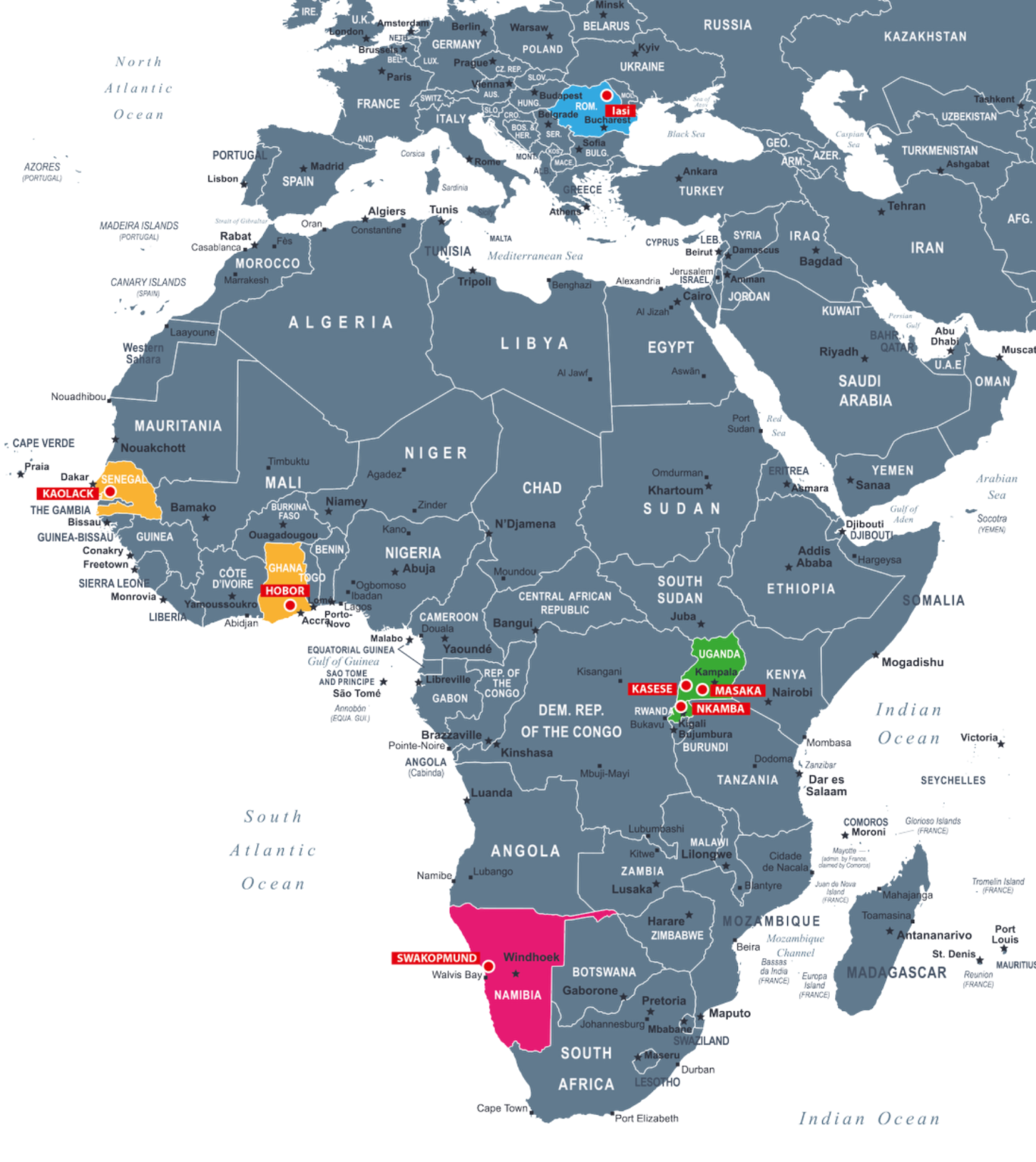

🇷🇴 ROMANIA - On the Moldovan border in eastern Romania, our boarding school & day centre enables children from precarious circumstances to attend public schools on a regular basis.

🇷🇴 ROMANIA - Our sports hall was opened in 2024 in the immediate vicinity of the boarding school, enabling our children to play, do sports and have fun, especially during the cold season.

🇺🇬 UGANDA - The further construction of our IMLS music school was halted due to suspected corruption.

🇺🇬 UGANDA - WES and REP (Reach the Poor) are building a school of excellence that will enable children to progress from nursery school through primary school to the end of their education.
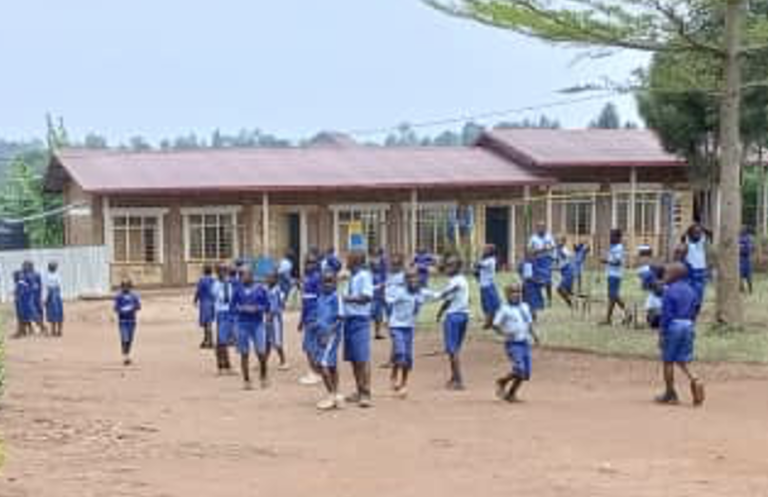
🇷🇼 RWANDA - The Werner Erkes Foundation East Africa financed the kindergarten, which was built in the immediate vicinity of Sunrise Primary School in Nkamba.

🇸🇳 SENEGAL - WEF West Africa financed the construction of an entire floor. The endowment fund in Osterode EDF and the Association AKS in Kaolack are responsible for operating the complex.

🇸🇳 SENEGAL - The Werner Erkes Sports Facility is part of the EDF Education Complex. The sports field and the integrated building with toilets and changing rooms are also rented out to local sports clubs.

🇸🇳 SENEGAL - Construction of our new WEF school complex in Kaolack (Senegal) is about to begin.

🇬🇭 GHANA - In 2025, the second floor and thus the first building were completed. Over 150 children attend the Kinder Zentrum International School, which has a total of nine teachers.

🇳🇦 NAMIBIA - The WEF OPEN DOORS EDUCATION CENTRE was opened in 2024. It offers a wide range of training courses for all situations in life, complementing the state school system.

🇳🇦 NAMIBIA - Our latest project opened its doors in January 2026. The WEF HORIZON Primary School is a unique school complex located in the middle of the informal settlement DRC in Swakopmund, Namibia.